
On the back of the card
- Miami-Dade County uses five storm surge planning zones, A through E; Zone A is at greatest risk, starting with Category 1 storms.
- Since Florida’s flood disclosure law took effect, sellers of residential property must give buyers a written flood disclosure at or before signing the sales contract.
- Florida’s homestead exemption can cut a primary home’s taxable value by as much as $50,000, and applications are due to the county property appraiser by March 1.
Miami is not one place. A tower apartment above the Miami River, a coral-rock cottage in Coconut Grove and a 1950s house on Key Biscayne share a county, a climate and a hurricane season, but they live very differently. This guide covers the questions worth asking in any neighborhood. The other articles on this site then walk through the areas one by one.
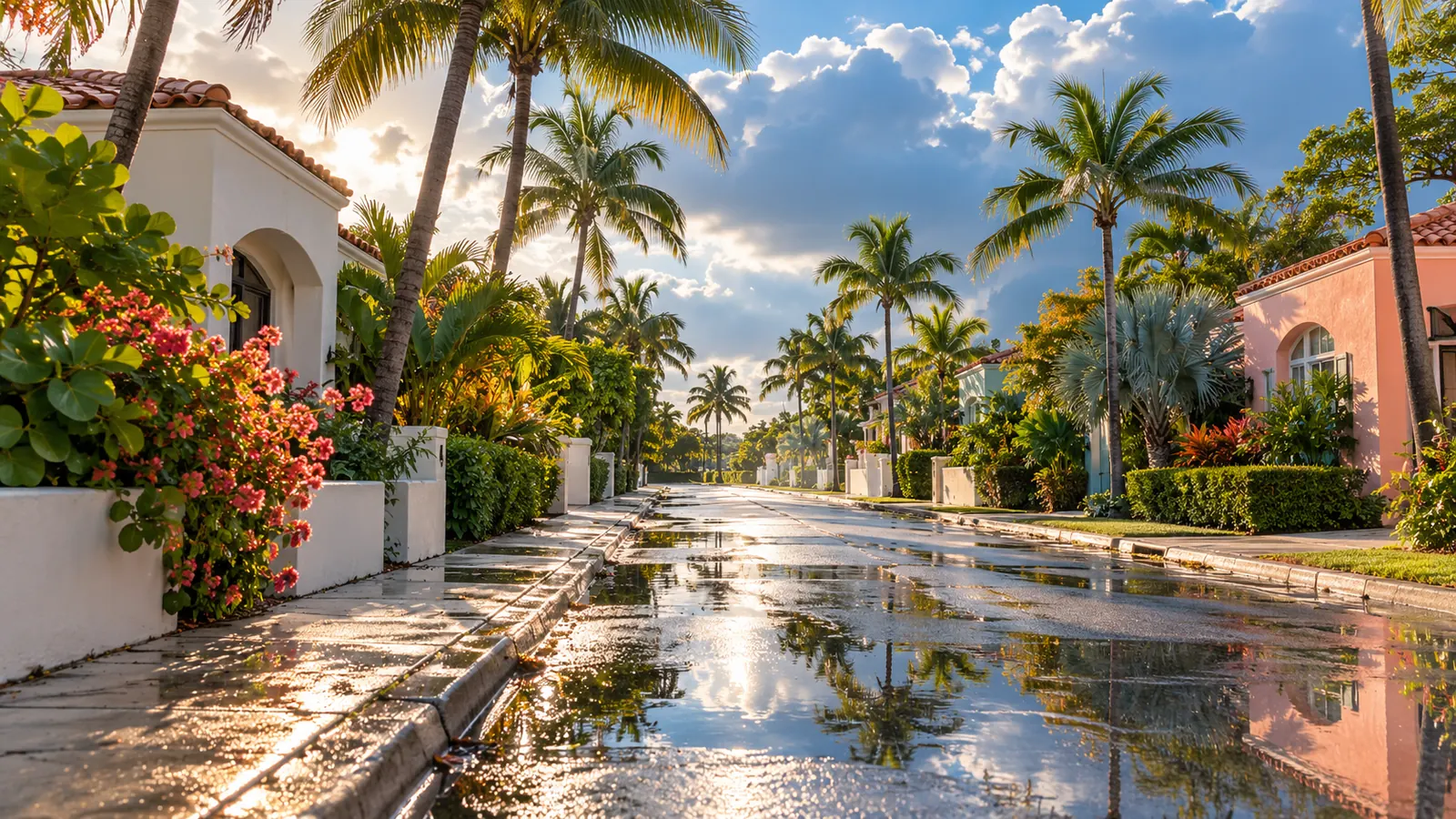
Start with water, not the view
Water shapes daily life here more than anything else, and it arrives in two separate ways that are mapped separately.
Storm surge planning zones
Miami-Dade County’s emergency managers divide the coast and low inland areas into storm surge planning zones. A zone marks land that could see a surge of one and a half feet or more during a hurricane. The zones are drawn from SLOSH storm surge model grids, which account for bays, rivers, canals, water depth and bridges, so some areas well away from the beach are included.
| Zone | At risk of storm surge from |
|---|---|
| A | Category 1 storms and stronger (greatest risk) |
| B | Category 2 and stronger |
| C | Category 3 and stronger |
| D | Category 4 and stronger |
| E | Category 5 storms |
When a storm threatens, the county orders zones or parts of zones to leave based on the track and the projected surge, not simply on the storm’s category. The county also notes that people in mobile homes and anyone who depends on electrically powered medical equipment should evacuate under any order, whatever their zone. Look up an address on the county’s surge zone map before you sign a lease, and sign up for Miami-Dade Alerts once you move.
Flood zones and flood history
Surge zones are not the same as the flood zones lenders and insurers use. The county is explicit that its planning zones deal strictly with storm surge, so you still need to find out separately whether a home floods in heavy rain.
Florida now helps with that. Under section 689.302 of the Florida Statutes, the seller of a residential property must complete a flood disclosure and give it to the buyer at or before the time the sales contract is signed. The form asks whether the seller knows of flooding that damaged the property during their ownership, whether they filed a flood insurance claim, including with the National Flood Insurance Program, and whether they received flood assistance, for example from FEMA. Flooding here includes sustained standing water from rainfall, not only storm tides.
Tip: The same statutory form reminds buyers that homeowners’ insurance policies do not include coverage for flood damage. Ask an insurance agent for a flood quote before you make an offer, not after.
Know the season you are moving into
The Atlantic hurricane season runs from June 1 to November 30, according to the National Hurricane Center, and its statistical peak falls around September 10. That overlaps with the rainy months. Federal climate normals for Miami International Airport show about 10.5 inches of rain in June and about 10.2 inches in September, against roughly 1.8 inches in January. July and August each average about 24 days at 90 degrees or warmer.
Winter is the reverse: highs around 76 degrees in January and, on average, no nights at freezing. Many people time a move for the dry months between December and April, when viewing homes and hauling boxes is easier.
Map the commute before the rent
Traffic is the complaint you will hear most, so ask how a neighborhood connects to transit. Metrorail runs 25 miles from Kendall through South Miami, Coral Gables and downtown to the airport and the northwest of the county. Metromover is a free elevated loop system through Brickell, downtown and the Omni area. On top of that, the City of Miami, Coral Gables and Miami Beach each run free trolleys. Living within a walk of a station changes what a home is worth to you; the details are in Getting Around Miami Without a Car: Metrorail, Metromover and the Free Trolleys.
Taxes: what changes when you own
Owners who make a Florida home their permanent residence can apply for the homestead exemption, which, per the Florida Department of Revenue, can reduce the property’s taxable value by as much as $50,000. The Miami-Dade Property Appraiser explains that the first $25,000 applies to all taxes and the second $25,000 does not apply to school taxes. After Amendment 5 passed in November 2024, the second part is adjusted each year for inflation, and the appraiser listed a total of $50,722 for tax year 2025.
- You must hold title and live in the home as your permanent residence on January 1.
- Applications and documents are due by March 1 for that tax year.
- Once a home is homesteaded, Florida’s Save Our Homes rule limits each year’s increase in assessed value to 3 percent or the change in the Consumer Price Index, whichever is lower.
- Renting out a homesteaded property can cost you the exemption, the appraiser warns.
Old buildings come with rules
The City of Miami has more than 100 individually designated historic sites and 10 local historic districts, regulated under Chapter 23 of the city code. Coral Gables and Miami Beach run their own preservation programs. If you plan to renovate, a protected house or district means design review. Call the city’s preservation staff before you buy, not after the contractor quotes.
A short checklist for every visit
- Surge zone letter for the exact address.
- The seller’s flood disclosure, or a frank question to a landlord about past flooding.
- A flood insurance quote alongside the homeowners or renters quote.
- Walking time to Metrorail, Metromover or a trolley stop.
- Whether the building or street sits in a historic district.
- For buyers: the March 1 homestead deadline after your first January 1 in the home.
With those answers in hand, the neighborhood guides here will help you weigh the rest: the parks, the history and the character of each part of the city.