
On the back of the card
- The City of Miami created Neighborhood Revitalization District 1 (NRD-1) in Wynwood on September 24, 2015, its first such district.
- NRD-1 rules aim to turn the old industrial district into a mixed-use neighborhood while preserving its street art and industrial character.
- The free Wynwood trolley runs Monday through Saturday from 6:30 a.m. to 11 p.m. and connects with Metromover at the School Board station.
Wynwood is a few blocks west of Edgewater and north of downtown, and it may be the most photographed neighborhood in Miami. Old one-story warehouses are covered in murals, and new apartment buildings rise between them. People who move here want to live inside the city’s art and nightlife scene. Here is how the neighborhood got this way and what living there involves.
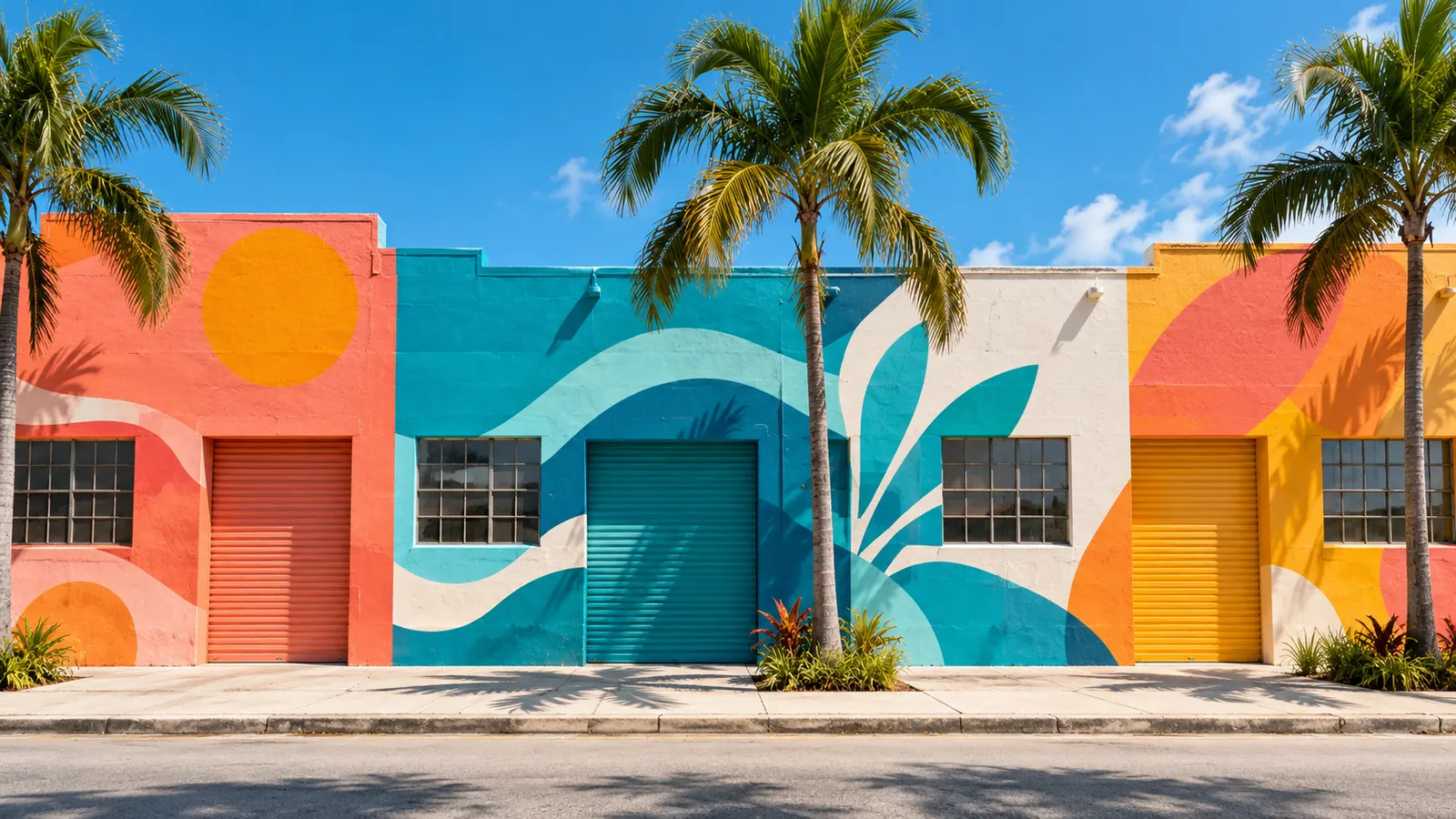
How a warehouse district became a neighborhood
The City of Miami’s planning department sums up the history briefly. Wynwood was known for manufacturing, clothing retail and logistics companies, and some big national names had plants here. Over time those companies left, and the area declined. In the 1990s art galleries began opening in the empty buildings, and as the district’s popularity grew, so did demand for development.
In response, the city worked with the Wynwood Business Improvement District to create the city’s first Neighborhood Revitalization District, known as NRD-1, adopted on September 24, 2015. Its rules are written to transition the old Wynwood industrial district into an active, mixed-use neighborhood.
What NRD-1 means for residents
If you live in or near Wynwood, the district’s rules shape what gets built around you. According to the city, NRD-1:
- Aims to preserve Wynwood’s street art and industrial character.
- Allows commercial uses such as shops and galleries, and civic uses including privately owned public open space.
- Lets developers gain more building capacity by contributing to public-benefit programs: affordable housing, parks and open space, and a Wynwood trust fund.
- Sets up the Wynwood Design Review Committee, which reviews development designs and property improvements to keep them in line with the area’s cultural and architectural character.
- Has its own rules on off-street parking, parking fees and waivers, under Chapter 35 of the city code.
- Created a public benefits trust fund to support affordable and workforce housing, parks and civic space in the district.
In practice, that means construction is part of daily life. A quiet lot next to your building may become a mid-rise within a couple of years. Before you sign, ask what is planned for the neighboring parcels.
Tip: Because the district deliberately limits parking in some projects, a new Wynwood apartment may come without a parking space. Ask whether parking is included, how much it costs and where guests can park.
Getting around
The free City of Miami Wynwood trolley covers the arts district and connects it to shopping areas, schools and parks, including Margaret Pace Park in Edgewater. It runs Monday through Saturday from 6:30 a.m. to 11 p.m.; the city lists no Sunday service on this route. Its stop at the School Board Metromover station links you to the free Metromover network and from there to downtown and Brickell.
The Biscayne trolley, which does run on Sundays, serves the corridor along Biscayne Boulevard to the east. For trips to Coral Gables or the airport, the usual path is a trolley or Metromover to downtown, then Metrorail. Details are in Getting Around Miami Without a Car: Metrorail, Metromover and the Free Trolleys.
Living with the art scene
Wynwood’s murals draw visitors every day, and its galleries and venues draw crowds at night and during large art events. That is the appeal and the downside. Consider these questions:
- Is the unit on a street with bars or event spaces? Visit on a Friday or Saturday night.
- Does the building have soundproof windows?
- Where do delivery trucks and ride-share cars stop?
- Will the mural on your wall be painted over by the next artist? In Wynwood, it often is.
Weather and water
Wynwood is inland compared with Edgewater, but Miami-Dade’s storm surge planning zones are drawn from a model that includes canals, rivers and low ground, so do not assume any address is outside them. Check the county map. Heavy summer rain is the more common problem: federal normals for the airport show about 10.5 inches in June and more than 9 inches in August. Ask whether the street floods in a downpour.
Buyers in Wynwood’s new condo buildings receive Florida’s flood disclosure from the seller at or before contract signing. Flood insurance is separate from a homeowners or condo policy.
If you buy a unit to live in, apply for the Florida homestead exemption with the Miami-Dade Property Appraiser by March 1 after your first January 1 in the home. If you buy as an investment and rent it out, the exemption does not apply, and the appraiser warns that renting a homesteaded property can cost you the benefit.
Who it suits
Wynwood suits people who want to live in a creative, changing district, who like walking to galleries and restaurants and do not mind noise and construction. It suits less well if you need easy parking, quiet weekends or a stable streetscape. Nearby Edgewater, covered in Living in Edgewater: Bayfront Towers North of Downtown, offers a calmer option a short trolley ride away.