
On the back of the card
- The Barnacle, built in 1891 on Biscayne Bay, is a state historic park open Thursday through Monday, with a $2 entry fee for walkers and cyclists.
- The free Coconut Grove trolley serves the Coconut Grove and Douglas Road Metrorail stations, parks and City Hall.
- The City of Miami lists Coconut Grove West among its historic districts, and names Bahamian cottages among the city’s significant historic properties.
Coconut Grove runs along Biscayne Bay south of Brickell, and it feels different from most of Miami. Streets curve under banyans and oaks, houses hide behind coral-rock walls, and the bayfront is lined with parks and marinas. It was settled before the city of Miami existed, and many residents moved here precisely because it still feels like a village.
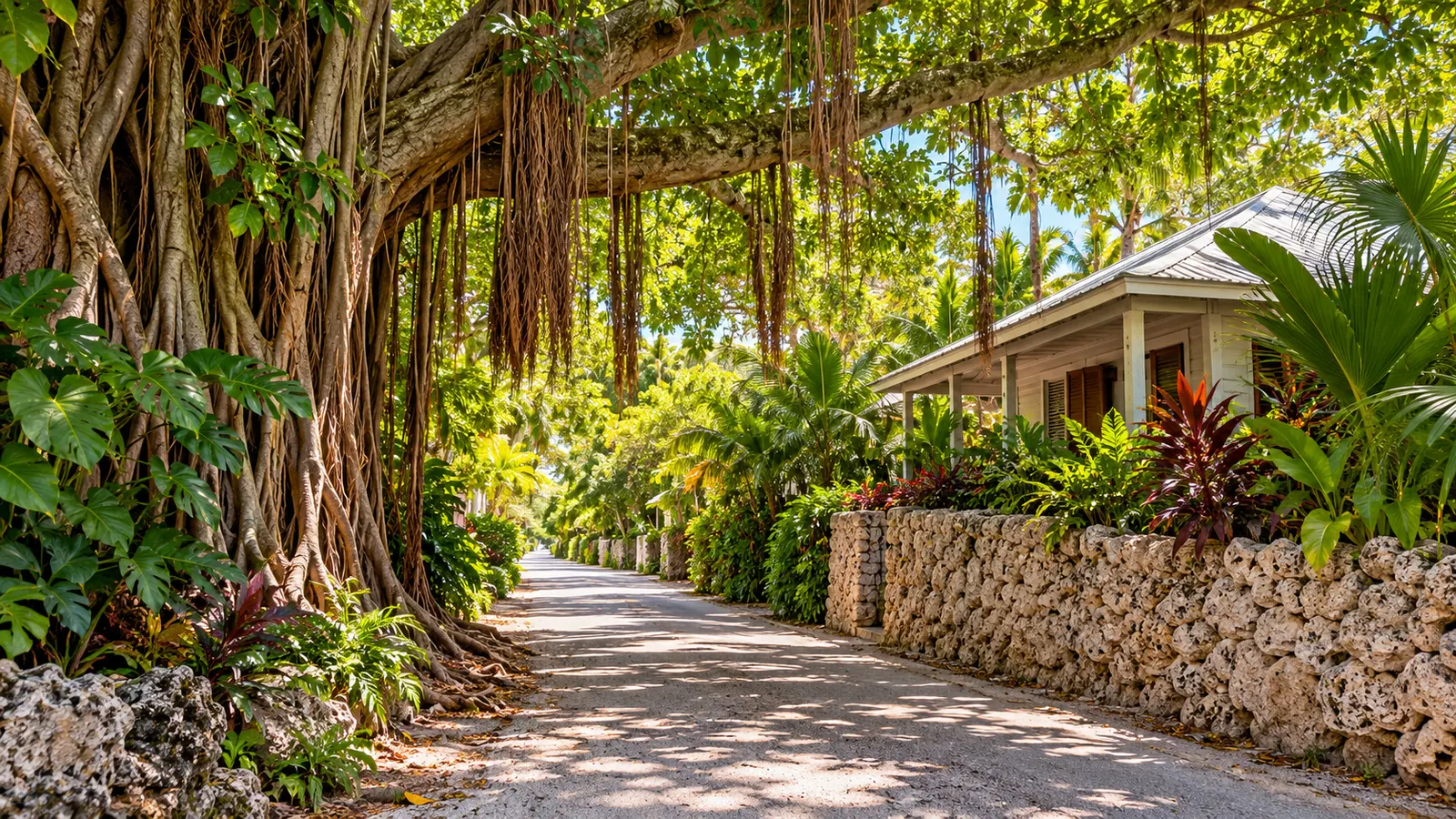
The Era of the Bay
The best place to understand the Grove’s past is the Barnacle Historic State Park on Main Highway. According to Florida State Parks, the house was built in 1891, during what is called the Era of the Bay, when all travel to and from Miami was by sea. It was the home of Ralph Middleton Munroe, a sailboat designer from Staten Island and the first commodore of the Biscayne Bay Yacht Club, who named it for its roof, which he thought looked like a barnacle.
Munroe kept most of the forest on his land, cutting only a narrow buggy trail through the hammock. That is why the park still has so many large, old trees. The grounds hold replicas of two of his boats, and the house appears much as it did in his day.
| The Barnacle | Details from Florida State Parks |
|---|---|
| Address | 3485 Main Highway |
| Open | Thursday through Monday, 9 a.m. to 5 p.m.; closed Tuesdays, Wednesdays, Christmas and New Year’s Day |
| Grounds | $2 per person on foot or by bike; 5 and under free; no car entry |
| House tours | 10 a.m., 11:30 a.m., 1 p.m. and 2:30 p.m.; $3 ages 13 and up, $1 ages 6 to 12 |
The park also manages the Marjory Stoneman Douglas House in the Grove, the home of the woman who defended the Everglades and launched a movement there. Each October, in the week before Halloween, the Barnacle holds an evening program in the darkened park.
Bahamian roots
The Grove’s history is not only that of its well-known pioneers. The City of Miami names Bahamian cottages among the city’s significant historic properties, and the Coconut Grove West historic district is one of the areas its preservation office oversees. Next door in Coral Gables, the city’s own history records that Bahamian workers helped clear the Merrick family’s land west of Coconut Grove at the turn of the century and that Bahamian stonemasons built much of that city in coral rock.
If you look at a house in Coconut Grove West, ask whether it lies in the historic district. Exterior changes there generally need a certificate of appropriateness from the city.
Parks on the bay
Peacock Park, at 2820 McFarlane Road, opens onto the bay and is open daily from 7 a.m. to 10 p.m., according to the City of Miami. It is the Grove’s main lawn for picnics, dog walks and watching the sailboats. The city’s Coconut Grove trolley also serves Bayside Park, Armbrister Park and Douglas Park.
Getting around
The Grove is one of the few village-like neighborhoods on Metrorail. The Coconut Grove and Douglas Road stations put downtown, Brickell and Dadeland within one ride. Trains run from 5 a.m. to midnight daily, and a ride costs $2.25.
The free City of Miami Coconut Grove trolley connects both stations with parks, shopping areas and City Hall, Monday through Saturday from 6:30 a.m. to 11 p.m. From Douglas Road station, the free Coral Gables trolley’s Grand Avenue route runs through the historic McFarlane Homestead District. More detail is in Getting Around Miami Without a Car: Metrorail, Metromover and the Free Trolleys.
Before you buy or rent
Trees and storms
The Grove’s canopy is its glory and, in a hurricane, a hazard. Ask about the trees near the house: who maintains them and when they were last trimmed. Large trees near power lines can mean longer outages after a storm.
Water
Bayfront and low-lying blocks fall within Miami-Dade’s storm surge planning zones, which run from A, at risk from Category 1 storms, to E. The Barnacle’s own boathouse was destroyed by the Great Miami Hurricane of 1926. Check the zone for any address and, if buying, read the seller’s Florida flood disclosure carefully. Flood insurance is a separate policy.
Older houses
Many homes are decades old. Ask about roof age, windows and hurricane shutters, and wiring and plumbing updates, all of which affect insurance.
Tip: Walk the streets you are considering after a summer afternoon storm. You will see quickly which ones drain and which hold water.
Who it suits
Coconut Grove suits people who want trees, history and the bay within walking distance, plus Metrorail for the commute. It suits less well if you want a new building with every amenity. For grand planned streets just inland, see Living in Coral Gables: The Planned City of Coral Rock.