
On the back of the card
- From 1962 through 1974 the Freedom Tower downtown housed the federal Cuban Assistance Center; the National Park Service estimates 650,000 Cuban refugees entered the United States in that era.
- Domino Park, at 1444 SW 8th Street, is open from 9 a.m. to 6 p.m. seven days a week, according to the City of Miami.
- The free Little Havana trolley connects the neighborhood with the Brickell Metrorail and Metromover station, including on Sundays.
Little Havana lies just west of Brickell and the Miami River, with SW 8th Street, Calle Ocho, as its main street. It is one of the best-known neighborhoods in the country, and for many Cuban American families it is where life in the United States began. It is also a real residential area of older houses and small apartment buildings, often more affordable than the towers a mile to the east.
Why the neighborhood looks the way it does
The story starts downtown. After 1959, large numbers of Cubans left the island for the United States, and many came to Miami. The National Park Service records that from 1962 through 1974 the federal government ran the Cuban Assistance Center in the building at 600 Biscayne Boulevard, which became known as the Freedom Tower. Refugees called it “El Refugio.” There they were registered, received medical and dental checks and food, and got help with housing, jobs and money.
Between December 1, 1965, and December 31, 1969, the Park Service says, more than 175,000 Cubans arrived on the twice-daily Freedom Flights from Varadero. It estimates that about 650,000 Cuban refugees entered the United States in this period. Many settled in the modest neighborhood west of downtown, and its shops, cafes and parks took on the character that visitors now come to see.
Two parks to know
| Park | Address | Hours listed by the city |
|---|---|---|
| Domino Park | 1444 SW 8th Street | 9 a.m. to 6 p.m., seven days a week |
| Jose Marti Park | 362 SW 4th Street | 6 a.m. to 10 p.m., seven days a week |
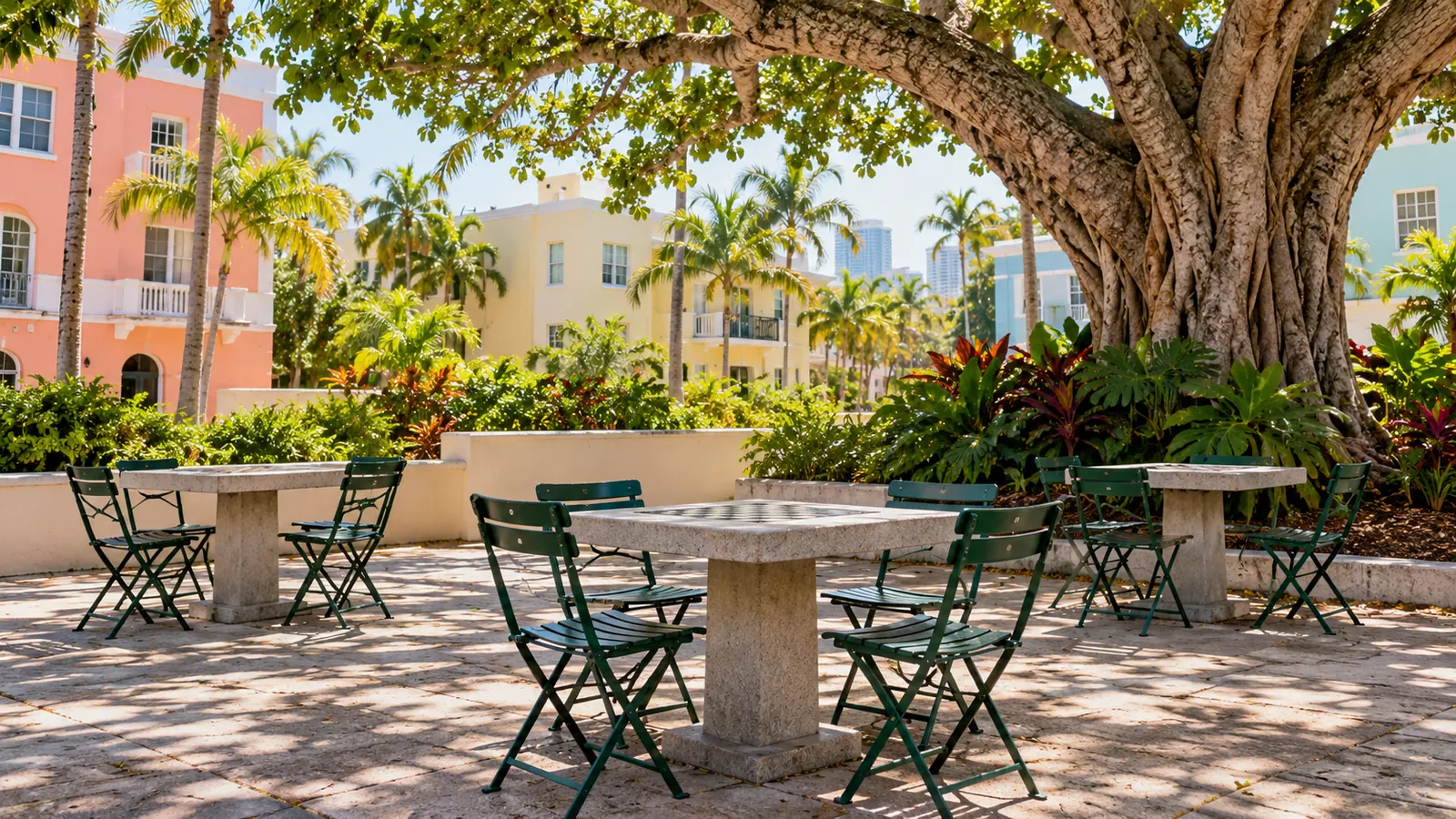
Domino Park, on Calle Ocho, takes its name from the games played at its tables and is one of the neighborhood’s best-known gathering places. If you stop to watch, treat the tables as you would a neighbor’s porch and ask before taking photos.
Jose Marti Park sits near the river on the eastern edge of the neighborhood. Beyond its green space, it has a public pool run by the city. The city lists lap swimming on weekdays from 6 a.m. to 9 p.m., water walking for adults 55 and older, swim lessons in the evenings and water aerobics on weekday mornings from November through early June. It says the water averages 81 to 83 degrees, which makes the pool usable all year.
Getting around
The free City of Miami Little Havana trolley connects the neighborhood with Brickell. It runs Monday through Saturday from 6:30 a.m. to 11 p.m. and on Sundays from 8 a.m. to 8 p.m. Stops include Jose Marti Park and Domino Park, and the route ends at the Brickell Metrorail and Metromover station. From there you can ride the free Metromover downtown or take Metrorail toward Coral Gables and the airport.
Metrobus routes also run along the main streets for $2.25 a ride, with free transfers to Metrorail on an EASY Card. The full picture is in Getting Around Miami Without a Car: Metrorail, Metromover and the Free Trolleys.
Housing: older buildings, practical questions
Much of the housing stock is decades old: single-family homes, duplexes and small apartment buildings. That brings character and, sometimes, lower rents, along with a few things to check.
- Hurricane protection: ask whether windows have impact glass or shutters, and who puts the shutters up.
- Air conditioning: in a place that averages about 24 days at 90 degrees or more in each of July and August, a weak unit is a serious problem.
- Water: the Miami River runs along the neighborhood’s northern side, so check the county storm surge planning zone and ask about street flooding in heavy rain.
- Electrical and plumbing: in older houses, ask when they were last updated.
If you are buying, the seller must give you Florida’s flood disclosure at or before contract signing, and flood insurance is separate from a homeowners policy. Living in the home as your permanent residence on January 1 lets you apply for the homestead exemption by March 1.
Historic buildings
The City of Miami’s preservation office lists Riverview and South River Drive among its historic districts, and individually designated buildings are scattered across older parts of the city. If you plan to change the outside of an older house, ask the city whether it is designated before you design the project.
Tip: Spanish is widely spoken in shops and offices here. Even a few phrases help when you are chatting with neighbors or asking about a rental posted in a window.
Who it suits
Little Havana suits people who want a neighborhood with deep roots and street life, quick trolley access to Brickell and a more modest price point than the towers. It suits less well if you want new construction with a gym and pool in the building. For that, Brickell is next door: see Living in Brickell: Towers, Transit and an Ancient Hammock.