
On the back of the card
- Brickell is served by the free Metromover Brickell loop, the Brickell Metrorail station and the free Brickell and Little Havana trolley routes.
- Simpson Park protects more than eight acres of tropical hardwood hammock, one of the last remnants of the Brickell Hammock.
- The Brickell Park and Mausoleum site on Brickell Avenue holds a Tequesta village and cemetery dated 500 B.C. to 500 A.D.
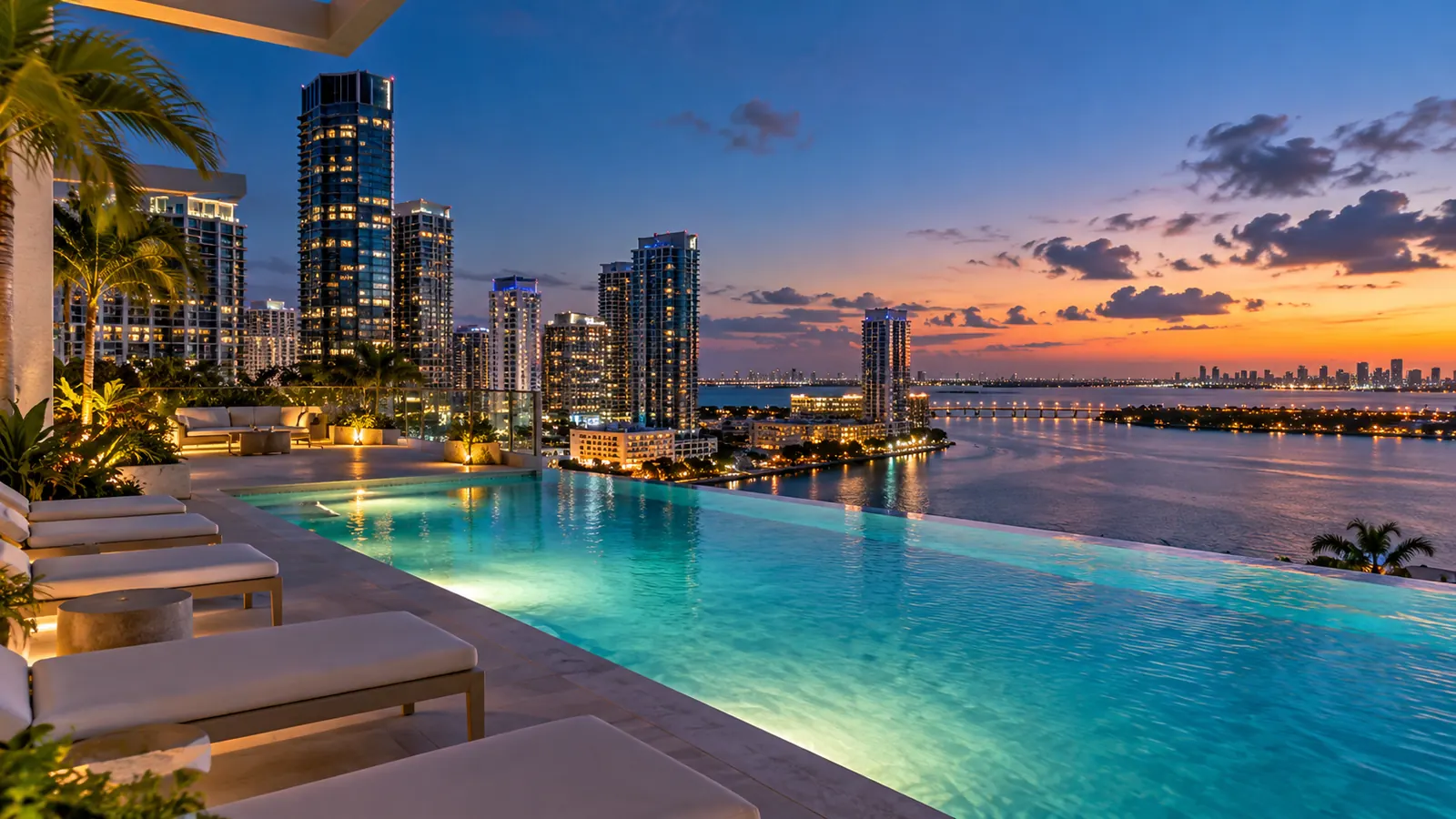
Brickell sits just south of the Miami River, between downtown and Coconut Grove. It is the city’s financial district, and over the past two decades it has also become its most vertical residential neighborhood. For many newcomers it is the first Miami address: you can live, work and run errands within a few blocks, and transit is unusually good. The trade-off is density, construction and a waterfront that faces the bay and its storms.
Who it suits
- People who work in Brickell or downtown and want to skip the car commute.
- Renters who want building amenities and are happy with apartment living.
- Anyone who likes a walkable, busy neighborhood more than a quiet one.
It suits less well if you want a yard, a garage workshop or a quiet residential street. For those, look at Coconut Grove or Coral Gables to the south.
Getting around
Brickell has more transit than almost anywhere in the county. The free Metromover Brickell loop starts at the Financial District station and ties into downtown. The Brickell Metrorail station puts you on the line to Coral Gables, Dadeland and, with a change, the airport. On the street, the free City of Miami Brickell trolley connects the financial district with residential blocks and parks, and the Little Havana trolley links Brickell with Calle Ocho. The Coral Way route links Brickell with the Coral Way district, and the Biscayne route runs north through downtown.
The Brickell and Biscayne trolleys run Monday through Saturday from 6:30 a.m. to 11 p.m. and on Sundays from 8 a.m. to 8 p.m. Metromover is free at all hours it operates. For how fares and passes work on Metrorail, see Getting Around Miami Without a Car: Metrorail, Metromover and the Free Trolleys.
Green space you would not expect
Before the towers, this whole ridge was the Brickell Hammock, a tropical hardwood forest on limestone. A piece of it survives in Simpson Park, on SW 17th Road. The City of Miami describes it as more than eight acres of hammock in the urban core and one of Miami’s first conservation efforts. The city counts more than 162 plant species there, at least 96 of them native, including live oak, strangler fig, gumbo limbo and lignum vitae, along with 15 endangered and 9 threatened species.
The park is open daily from 8 a.m. to 3 p.m., and the trail closes in advance of heavy rain or strong winds. Park naturalists lead free half-mile nature walks on Saturdays and Sundays. If you live in a tower, an hour under that canopy is a good reminder of what South Florida looked like.
History under the pavement
Brickell is also one of the oldest places of human settlement in the city. The City of Miami’s historic preservation office lists two archeological zones here.
| Site | Address | What the city records |
|---|---|---|
| Brickell Park and Mausoleum | 501 Brickell Avenue | Tequesta village and cemetery, 500 B.C. to 500 A.D.; Brickell family mausoleum, 1924, listed in the National Register in 1989 |
| Miami Circle | 401 Brickell Avenue | Circle of holes cut into limestone bedrock, 500 B.C. to 900 A.D., thought to be the footprint of a structure in the Tequesta village |
The mausoleum is the only surviving structure associated with the Brickell family, whose name the neighborhood carries. The city notes that the Tequesta village once stood on both the north and south banks of the Miami River.
Tower living: what to check
Hurricanes and surge
Much of Brickell lies along Biscayne Bay and the river, so check the county’s storm surge planning zone for the exact building. Zone A areas can be ordered to evacuate for a Category 1 storm. Ask the building how it handles evacuation orders, elevators and power outages, and where residents park cars if the garage floods.
Flood disclosure and insurance
If you buy a unit, Florida law requires the seller to give you a written flood disclosure at or before signing, covering known flood damage, insurance claims and federal assistance. Homeowners policies do not cover flood, so price flood insurance separately. Renters should ask the landlord the same questions and check whether their renters policy covers their belongings in a flood.
Homestead if you buy
A condo you live in as your permanent home can qualify for the Florida homestead exemption if you own it on January 1 and apply by March 1. If you later move and rent the unit out, the Miami-Dade Property Appraiser warns that renting can cost you the exemption.
Tip: Walk the neighborhood at the hour you would usually come home. Brickell is lively at night, and a unit above a busy corner sounds very different from one facing the bay.
Bottom line
Brickell is the easiest place in Miami to live without a car, and it hides more history and nature than its skyline suggests. Go in with clear answers on surge, flood insurance and building rules, and it can be a very practical first home in the city. Neighboring downtown is covered in Living in Downtown Miami: The Free Metromover and a Century of History.