
On the back of the card
- Coral Gables was incorporated on April 29, 1925; by October 1926 it had more than 4,000 structures, including 2,792 homes and apartments, according to the city.
- The Venetian Pool, a former coral rock quarry, is fed by spring water and refilled daily with more than 820,000 gallons.
- The free Coral Gables trolley runs Monday through Saturday from 6:30 a.m. to 10 p.m. from the Douglas Road Metrorail station.
Coral Gables sits southwest of downtown Miami, inland from Coconut Grove. It is its own city, with its own government and building rules, and it looks it: wide avenues, plazas and grand entrances, stucco and coral-rock houses, and a dense canopy of trees. It was designed on paper before it was built, and that planning still shapes what living there is like.
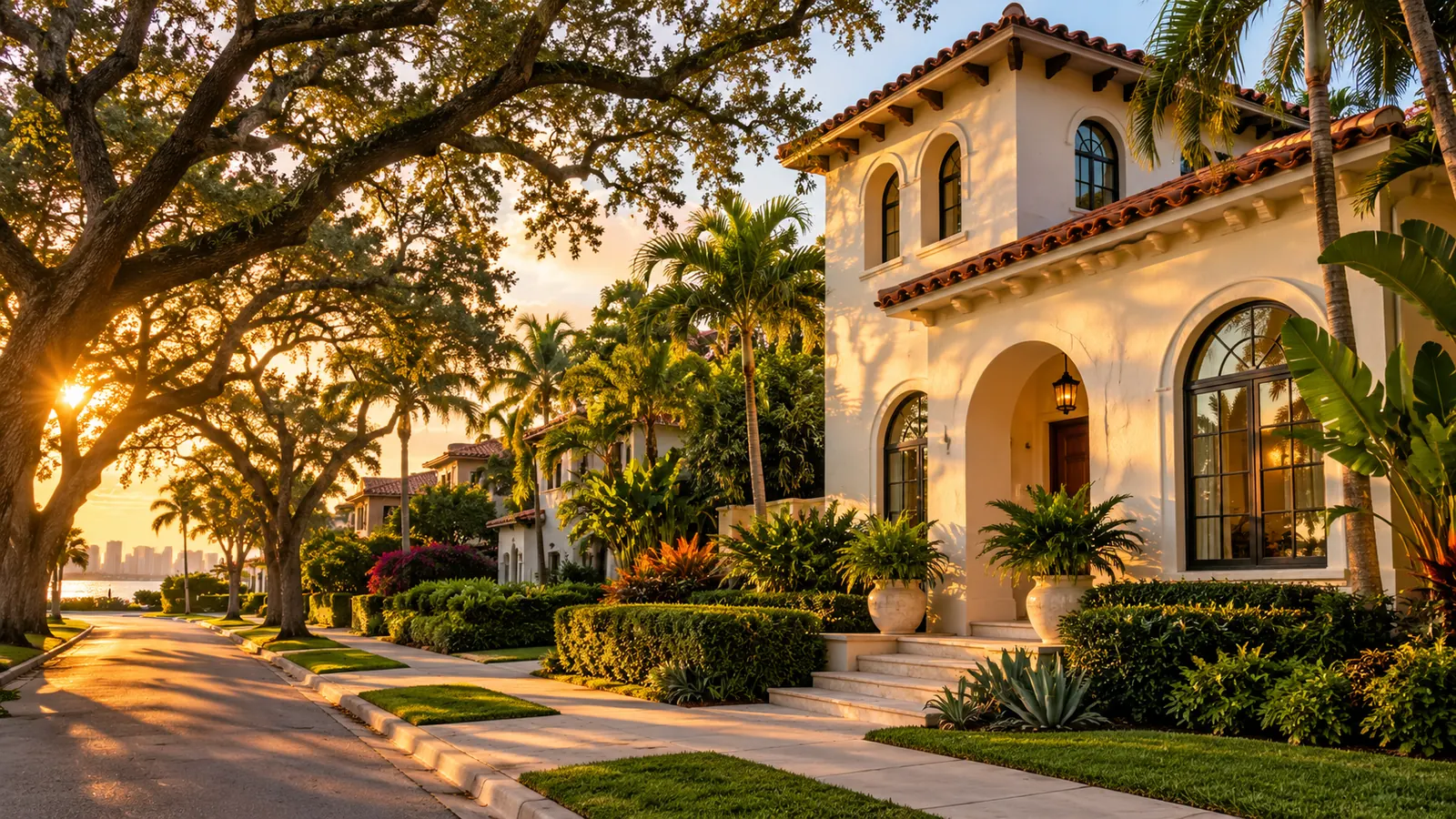
A city drawn on paper
The city’s own history begins in 1899, when Reverend Solomon Merrick moved his family from Massachusetts and bought a 160-acre tract west of Coconut Grove for $1,100, sight unseen. Helped by Bahamian workers, the family cleared the land and planted grapefruit and avocado groves. They built a house of local coral rock, quarried from the pit that later became the Venetian Pool, and named it Coral Gables.
His son George Merrick expanded the holdings to 1,600 acres by 1920 and assembled a team to design a whole city. By early 1921 Coral Gables was mapped out, and the first lots were sold that year. The city credits three people with turning the vision into streets and buildings:
- Denman Fink, Merrick’s uncle and art director, who designed landmarks such as the Venetian Pool and City Hall and shaped the plan’s entrances and plazas.
- Phineas Paist, the supervising architect.
- Frank Button, the landscape architect behind the winding drives and tree-lined boulevards, who imported tropical plants from around the world.
The city was incorporated on April 29, 1925. By then, building permits exceeded $25 million. By October 1926 there were more than 4,000 structures, including 2,792 homes and apartments, 11 schools and six hotels, with 100 miles of paved streets. Many of the stonemasons were Bahamians skilled in coral rock construction.
Built to last, and kept that way
Merrick’s company literature promised buildings as permanent as the rock they were built from, an ideal the city says it still strictly follows. For residents, that means Coral Gables reviews the look of buildings closely and runs its own historic preservation program. Before you plan a renovation, a new fence or a color change, check the city’s rules. Many owners see the strict standards as the reason property holds its appeal; others find them frustrating.
The Venetian Pool
The old quarry became a very unusual public pool. Fink turned the pit into a free-form lagoon with grottos, waterfalls and a palm-fringed island. It was built in 1924, originally named the Venetian Casino, and is listed in the National Register of Historic Places. The city says it is fed by spring water from an underground aquifer and refilled daily with more than 820,000 gallons.
| Venetian Pool admission | Coral Gables residents | Non-residents |
|---|---|---|
| Adults, 13 and older | $7 | $23 |
| Children, 3 to 12 | $6 | $18 |
Children must be at least 3 years old and 38 inches tall, and adult residents need proof of residency for the lower rate. The city notes that fees are subject to change.
Getting around
Coral Gables has its own free trolley, running since 2003 and carrying more than a million passengers a year. It operates Monday through Saturday from 6:30 a.m. to 10 p.m. on two routes from the Douglas Road Metrorail station:
- Ponce de Leon, north and south along Ponce de Leon Boulevard to Flagler Street.
- Grand Avenue, through the historic McFarlane Homestead District.
A one-year pilot of a Southern Loop, started November 3, 2025, extends free service from Douglas Road station along Ponce de Leon toward Red Road, serving the University of Miami area. The trolley does not run on Sundays. Metrorail itself runs along the city’s eastern side; see Getting Around Miami Without a Car: Metrorail, Metromover and the Free Trolleys.
Outdoors
Beyond the pool, the city points residents to Matheson Hammock, a 630-acre park on the bay that wraps around a large botanic garden. Combined with the tree canopy on residential streets, it makes the Gables one of the greenest places to live in the county.
Practical checks
- Ask whether a house is historically designated before you plan any exterior work.
- Check the storm surge planning zone for addresses near the bay; inland streets may sit outside the zones, but bayfront ones may not.
- Read the seller’s Florida flood disclosure and price flood insurance separately.
- Apply for the homestead exemption by March 1 if the home is your permanent residence.
Tip: Drive or ride the trolley along the routes you would use daily at rush hour. The Gables’ winding streets are beautiful, but they are not the fastest way across town.
Who it suits
Coral Gables suits people who want an orderly, green city with strong design standards and access to Metrorail. It suits less well if you want freedom to remodel as you please or a nightlife scene on your doorstep. For a looser, older village feel, see Living in Coconut Grove: Old Trees, Bay Breezes and Pioneer History.